
Shanghai Gengyun Industrial Co., Ltd
Recycled LSZH Compound for Power Cable Polyolefin
Definition and Environmental Value
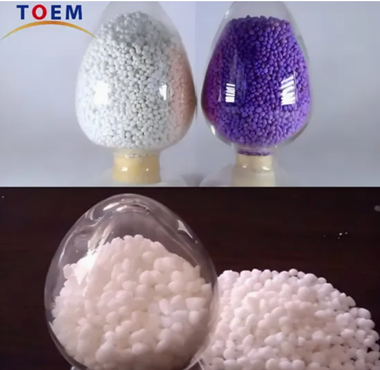
Recycled LSZH Compound is an eco-friendly material. It uses recycled Low Smoke Zero Halogen components. Advanced technology creates this Polyolefin composite. It balances waste recovery with high performance. It maintains excellent flame retardant properties. Its recycled content reaches 50-70%. It is a key material for a circular economy. It helps reduce the industry’s carbon footprint.
Core Characteristics
This compound has three core features. First, it achieves the IEC 60332-3-24 Cat.A standard. Its smoke density exceeds 60% light transmittance. Its toxicity index stays below 5. Second, it has strong mechanical properties. Tensile strength is over 10 MPa. Elongation at break exceeds 150%. It suits medium and low-voltage power cables. Third, it provides stable electrical performance. Volume resistivity is above 10¹⁴ Ω·cm. Its dielectric constant is 2.3-2.5. It meets GB/T 19666 standards. A unique compatibilizer system ensures material uniformity
Application and Advantages
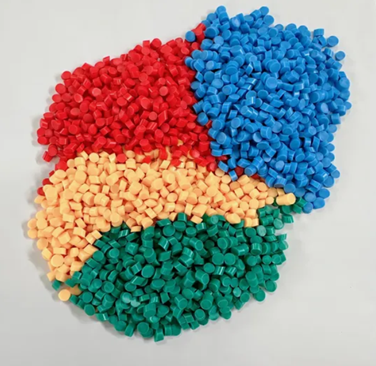
This sustainable cable compound has wide uses. It insulates and sheaths power cables. Applications include building wiring and rail transit. It is also used in new energy power stations. Processing data shows high efficiency. Extrusion speeds reach 80 m/min. Product qualification rates exceed 99.5%. Compared to traditional PVC materials, it is safer. It improves fire safety performance. Its recycling technology cuts carbon emissions by over 40%. It supports global dual carbon goals.
Future Trends and Traceability
The circular economy concept is deepening. New intelligent recycled materials are emerging. They integrate traceability and certification functions. Tracers combined with blockchain enable full tracking. This covers material sources and processing history. It also includes performance data. In building green supply chains, these materials lead change. They drive the industry toward resource conservation. They also promote environmental friendliness.
Key words:
Low Smoke Zero Halogen (LSZH)
Recycled LSZH Compound for Power Cable Polyolefin
Environmentally Friendly Cable Material
Circular Economy Sustainable Cable Compound
Green supply chains resource conservation