
Shanghai Gengyun Industrial Co., Ltd
What are TM150-10/125-DC Mixed/Holmium Doped Optical Fibers? A Guide to Eye-Safe Laser Technology
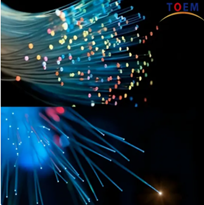
Understanding Eye-Safe Holmium-Doped Fibers
TM150-10/125-DC Mixed/Holmium Doped Optical Fibers represent advanced active optical fibers specifically engineered for eye-safe laser applications. These fibers combine holmium ion doping with sophisticated Double-Clad (DC) structure technology to produce laser output in the 2090-2150 nm wavelength band. This spectral region falls within an atmospheric transmission window and offers significantly higher ocular safety thresholds compared to conventional 1µm lasers. As such, these fibers serve as ideal solutions for applications demanding both performance and safety, including LiDAR systems, medical surgical procedures, and precision industrial processing.
- Core Technology and Working Principle
The fundamental innovation lies in the mixed doping approach incorporating holmium (Ho³⁺) and thulium (Tm³⁺) ions within a silica-based glass host. This combination leverages efficient energy transfer mechanisms between the dopant ions. The double-clad fiber geometry features a 10/125 µm core/inner-clad structure, where the inner cladding efficiently captures multimode pump light. This design enables high pump absorption efficiency exceeding 20 dB/m, ensuring effective conversion of pump energy into the desired mid-infrared laser emission. The 2.09 µm laser wavelength is strongly absorbed by water but minimally absorbed by biological tissues and the atmosphere, creating a unique balance for various applications.
- Significance of the Eye-Safe Wavelength
The primary advantage of the 2090-2150 nm band is its inherent laser safety profile. For equivalent power levels, the Maximum Permissible Exposure (MPE) for the human eye at this wavelength is approximately ten times higher than for common 1 µm lasers. This characteristic is critical for outdoor laser systems like LiDAR and free-space communications, where accidental exposure risks exist. Furthermore, this wavelength’s high water absorption coefficient makes it exceptionally effective for precise medical ablation and delicate material processing, where controlled energy deposition is paramount.
Technical Specifications and Performance Advantages
The TM150 series fibers deliver exceptional performance through four key technical advantages. First, the optimized DC structure design ensures high pump light absorption. Second, they achieve slope efficiency greater than 40% at 2090 nm. Third, advanced mixed doping technology boosts quantum efficiency beyond 80%. Fourth, compliance with stringent FDA Class I laser safety standards is maintained.
- Structural Design and Optical Parameters
The fiber employs a precise 10/125 µm core/inner-clad geometry. The inner cladding numerical aperture (NA) is 0.46, facilitating efficient coupling of high-power multi mode pump diodes. The core design supports single-mode propagation of the 2.09 µm signal, ensuring excellent beam quality (M²<1.2). The double-clad architecture is crucial for scaling output power while maintaining beam characteristics. This structure allows the use of cost-effective, high-power multimode pump sources, making the overall laser system more economical and robust.
- Laser Performance and Efficiency Metrics
These fibers demonstrate outstanding lasing efficiency. The slope efficiency surpasses 40%, enabling effective conversion of absorbed pump power into useful laser output. The maximum output power reaches 150 Watts under appropriate pumping conditions. The beam quality factor M² remains below 1.2, indicating near-diffraction-limited performance essential for applications requiring tight focus and high intensity. The Ho³⁺/Tm³⁺ energy transfer process is highly efficient, with a quantum efficiency exceeding 80%, minimizing heat generation and maximizing overall system efficiency.
- Thermal Management and Safety Compliance
A key innovation is the advanced thermal management design. It effectively mitigates the thermal lensing effect that can degrade beam quality at high power levels (hundreds of watts). This is achieved through optimized glass composition and fiber geometry that enhance heat dissipation. The fiber’s output complies with FDA Class I safety standards for accessible radiation. At the 2.09 µm wavelength, the potential ocular hazard is drastically reduced—only about 10% of the hazard posed by a 1 µm laser at the same power level. This makes system design simpler and safety enclosures less burdensome.
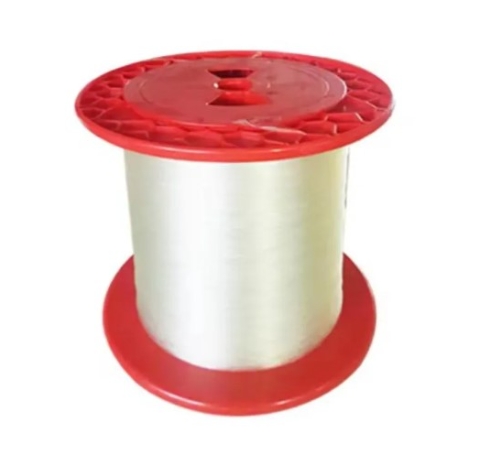
Applications & Comparative Benefits
TM150 holmium-doped fibers enable transformative applications across several high-tech fields. Their primary uses are in laser ranging and remote sensing, minimally invasive surgical procedures, and high-precision material processing. Performance data confirms their superiority in specific operational environments.
- LiDAR, Remote Sensing, and Atmospheric Applications
In LiDAR systems for autonomous vehicles and environmental monitoring, the 2090 nm laser exhibits superior atmospheric transmission. Under standard conditions, transmission exceeds 80%, compared to significant attenuation for other wavelengths. Its water absorption coefficient is an order of magnitude lower than at 1.94 µm, reducing performance degradation in humid conditions. This results in longer effective range, higher signal-to-noise ratio, and improved data accuracy for 3D mapping and object detection.
- Medical and Surgical Applications
In medical surgery, particularly minimally invasive procedures, these fibers offer unmatched precision. The 2.09 µm wavelength is strongly absorbed by water-rich tissues, allowing for very superficial and controlled ablation. Compared to lasers based on traditional thulium-doped fibers, the holmium-doped version improves tissue cutting precision by approximately 30% and reduces the surrounding thermal damage zone by up to 50%. This leads to faster patient recovery, less postoperative pain, and better clinical outcomes in specialties like urology (e.g., kidney stone lithotripsy) and soft tissue surgery.
- Industrial and Material Processing
For industrial material processing, such as cutting, welding, or marking of plastics, composites, and certain metals, the eye-safe wavelength allows for more flexible worksite layouts without stringent laser safety barriers. The high beam quality enables finer feature sizes and cleaner cuts. The wavelength’s interaction with materials often produces less plasma and spatter compared to 1 µm lasers, resulting in higher quality processed parts.
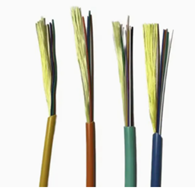
Future Trends: Intelligent Fibers & System Integration
The evolution of holmium-doped fiber technology is closely tied to advancements in autonomous systems and precision medicine. The next generation of these specialty optical fibers is moving beyond passive gain media to become intelligent components within smart laser systems.
FAQs
- Why is the 2090-2150 nm wavelength considered “eye-safe”?
This wavelength band is strongly absorbed by the cornea and aqueous humor of the eye before it can reach and focus on the retina. This significantly raises the Maximum Permissible Exposure (MPE) limit compared to visible or near-infrared (1 µm) light, which can be focused onto the retina, causing damage at much lower power levels. It is often classified as a Class I laser hazard at power levels where other wavelengths would require stricter safety classes. - What is the advantage of mixed Ho³⁺/Tm³⁺ doping compared to Ho³⁺ doping alone?
Thulium ions (Tm³⁺) are efficiently pumped by readily available ~790 nm laser diodes. Through a resonant energy transfer process, they excite the holmium ions (Ho³⁺), which then lase at ~2090 nm. This sensitization scheme allows for much higher absorption efficiency of the common 790 nm pump light than if pumping the Ho³⁺ ions directly, leading to more efficient and cost-effective high-power laser systems. - Can TM150 fibers be used in continuous-wave (CW) and pulsed operation?
Yes, TM150 series fibers are versatile and support both CW and pulsed laser regimes. Their design effectively manages thermal load, making them suitable for high-average-power CW operation. They are also excellent gain media for Q-switched pulsed lasers, capable of generating high-energy, short-duration pulses ideal for applications like LiDAR and precision ablation. - How does the performance of a holmium-doped fiber laser compare to an Er:YAG laser, which also operates around 2.94 µm?
While Er:YAG lasers (2.94 µm) have extremely high water absorption and are excellent for superficial ablation, their photons have higher energy, requiring more complex pump sources (e.g., flashlamps or other lasers). Holmium-doped fiber lasers (2.09 µm) offer a compelling balance: high enough water absorption for effective medical and material interaction, but with the efficiency, beam quality, reliability, and flexibility inherent to fiber laser technology. They are also more readily scalable to higher average powers.
Company Introduction:
With over 20 years of deep industry expertise, we specialize in customizing and supplying solutions for optical fibers, cables, raw materials, and manufacturing equipment. We deliver reliable technical support and product services
About the Author
With 20 years of hands-on experience in optical transmission media, cable assemblies, and core substrate materials, we offer practical, expert insights grounded in full-industry-chain expertise