
Shanghai Gengyun Industrial Co., Ltd
What is LSZH Compound Pellet? A Complete Guide for Green Cable Sheathing
The Green Evolution in Cable Manufacturing
The cable industry is transforming for sustainability. Global environmental regulations and market demand drive this shift. Traditional polyvinyl chloride (PVC) sheaths now face scrutiny. This is due to environmental and safety concerns. The Low Smoke Zero Halogen (LSZH) compound pellet is a key innovation. It enables green cable manufacturing. This compound is not just an alternative. It represents next-generation sheathing technology. It balances safety and a lower environmental footprint. Therefore, manufacturers can make responsible, reliable cables.
- The Driving Force: Why LSZH is Now Essential
Regulatory and market forces propel the LSZH movement. Modern building and fire safety codes are key drivers. They often require safer materials for fires. This is vital in enclosed spaces. Examples include airports and data centers. Regulations like the EU’s Construction Products Regulation (CPR) guide this. LSZH typically achieves high safety classes. Also, environmental rules like RoHS and REACH restrict hazardous substances. They push the industry away from halogens. The LSZH pellet sits at this safety-environment intersection.
- Beyond Basic LSZH: The Compound Pellet Advantage
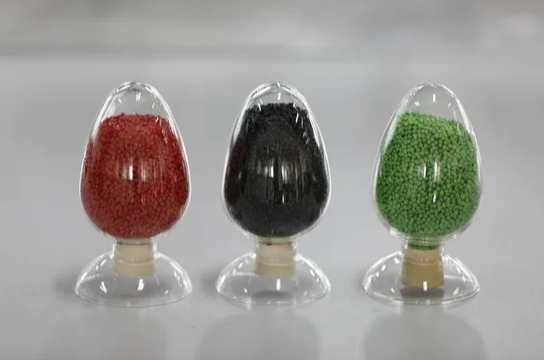
Early LSZH had some challenges. These included lower flexibility. Modern LSZH compound pellets solve these issues. They use advanced material science. A base polymer mixes with halogen-free flame retardants. Then manufacturers add stabilizers and processing aids. The result is uniform polymer pellets. This ensures consistent quality. So, the material meets core LSZH promises. It also suits high-speed cable production.
Technical Composition and Key Performance Attributes
A quality LSZH compound performs well due to precise formulation.
- Core Formulation: A Delicate Balance
Making an effective compound requires balance. Key components include:
- Polymer Matrix: This provides structure and insulation. Common choices are LDPE, LLDPE, or EVA Copolymers. They offer flexibility and toughness.
- Halogen-Free Flame Retardants (HFFR): Aluminum Trihydroxide (ATH) or Magnesium Dihydroxide (MDH) are typical. They absorb heat and release water vapor when heated.
- Synergists and Modifiers: These boost flame retardancy. They also improve mechanical properties. Antioxidants add aging resistance.
- Sustainable Fillers: Some compounds may use recycled content. This supports circular economy
- Quantifiable Performance Advantages
A good LSZH pellet offers many benefits:
- Fire Safety Performance: It shows strong flame retardancy. It also has low smoke density. Critically, it emits zero corrosive gases.
- Mechanical and Physical Properties: It provides good tensile strength. It also resists environmental stress cracking.
- Superior Processability: The pellet form ensures consistent flow. This allows smooth extrusion and high yields.
- Long-Term Reliability: It offers excellent weather resistance. So, cables maintain performance for decades.
Application in Cable Production and Strategic Value
Using LSZH compound pellets in manufacturing boosts cable performance.
- The Cable Extrusion Process
In production, pellets enter an extruder hopper. The machine heats and melts them. Then, the molten compound forms a sheath over the cable core. The compound’s rheology is crucial here. It enables high-speed, uniform production. This avoids surface issues.
- Enabling Safer, Greener Cable Products
Cables with this material serve critical areas:
- Public Infrastructure: This includes mass transit and hospitals.
- Data Centers: These protect high-value equipment.
- High-Rise Buildings: They are used in riser cables.
- Industrial Automation: Here, personnel safety is key.
For manufacturers, these pellets bring strategic value: - Regulatory Compliance: They help meet CPR and NEC codes.
- Brand Reputation: They position products as sustainable.
- Risk Reduction: They lower fire hazard liability.
- Sustainability Goals: They support corporate ESG commitments.
Future Trends and Conclusion
LSZH materials continue to evolve. Future work will improve halogen-free flame retardants. This will allow lower filler loading. So, mechanical properties can get better. Using more recycled materials is also a goal. This supports a circular economy. Bio-based polymers are another research area. They could make cable sheaths even greener. advanced LSZH compounds remain vital. They help build a safer, greener networked world
FAQs
1. What is the main difference between LSZH and standard PVC for cable sheaths?
The key difference is their fire behavior. PVC contains chlorine, a halogen. When burned, it makes thick, black smoke. It also releases corrosive acid gas. LSZH materials have no halogens. They make much less smoke. Also, they produce no corrosive gases. So, LSZH is for life safety in public spaces
2. Are LSZH sheaths as durable and flexible as traditional materials?
Early LSZH could be stiffer. But modern compounds have improved greatly. Advanced polymer engineering now helps. So, today’s high-quality LSZH sheaths are flexible. They also resist abrasion well. Thus, they suit demanding installat
3. Can LSZH compound pellets be processed on standard cable extrusion equipment?
Yes, they can. High-quality pellets work with standard lines. But, mineral flame retardants may change melt flow. You might need small temperature adjustments. Good suppliers provide clear processing guidelines.
4. How do I verify the environmental and fire safety claims of an LSZH pellet?
Always ask for independent test reports. Check these key standards:
- Fire Performance: IEC 60332, IEC 61034, IEC 60754.
- Environmental Compliance: Proof of RoHS and REACH compliance.
- For sustainability, request proof of recycled content claims.
Company Introduction: With over 20 years of deep industry expertise, we specialize in customizing and supplying solutions for optical fibers, cables, raw materials, and manufacturing equipment. We deliver reliable technical support and product services.
About the Author: With 20 years of hands-on experience in optical transmission media, cable assemblies, and core substrate materials, we offer practical, expert insights grounded in full-industry-chain expertise.