
Shanghai Gengyun Industrial Co., Ltd
Complete Guide to Para-Aramid Fiber Technology
Introduction to Para-Aramid Fiber
Para-Aramid Fiber known globally as para-aramid fiber, represents a class of high-performance synthetic fibers with exceptional strength and heat resistance. The term “para-aramid” refers to the molecular structure where polymer chains align in parallel orientation, creating remarkable tensile properties. DuPont first commercialized this technology in the 1970s under the brand name Kevlar, which remains the best-known example today.
These fibers consist of long molecular chains produced from poly-paraphenylene terephthalamide. The manufacturing process involves spinning a liquid crystalline solution through spinnerets, which aligns the polymer chains along the fiber axis. This molecular orientation gives para-aramid fibers their characteristic high tensile strength, typically five times stronger than steel on an equal weight basis. Consequently, these materials serve critical applications where strength-to-weight ratio matters most.
- Chemical Structure and Properties
The para-aramid molecular structure features rigid polymer chains with strong interchain bonding. This arrangement creates highly crystalline regions that resist deformation under load. The fibers exhibit exceptional tensile strength, typically ranging from 2.8 to 3.4 GPa. They maintain this strength at temperatures up to 300°C and resist combustion, decomposing without melting. Additionally, they resist organic solvents and fuels, making them suitable for harsh environments.
- Manufacturing Process
Production begins with polymerization of paraphenylenediamine and terephthaloyl chloride in a solvent. The resulting polymer solution undergoes dry-jet wet spinning through spinnerets into a coagulation bath. This process orients the molecules along the fiber axis. Subsequent washing, neutralization, and drying remove residual solvents. Finally, heat treatment under tension further increases crystallinity and modulus. The entire process requires precise control to achieve consistent fiber properties.
- Mechanical Characteristics
Para-aramid fibers exhibit a unique combination of mechanical properties. Their tensile modulus ranges from 60 to 120 GPa depending on grade, providing exceptional stiffness. Elongation at break typically measures 2-4%, indicating limited stretch before failure. The fibers show negative coefficient of thermal expansion, meaning they contract slightly when heated. They also demonstrate excellent creep resistance, maintaining dimensions under sustained load.
- Thermal and Chemical Resistance
These fibers maintain structural integrity at temperatures where most materials fail. Continuous use temperatures reach 160-180°C, with short-term exposure possible up to 400°C. They do not melt but begin carbonizing at extreme temperatures. Chemical resistance includes excellent stability against most solvents, fuels, and lubricants. However, strong acids and bases can degrade the polymer over time, limiting applications in extreme pH environments.
Key Applications and Use Case
Para-aramid fibers serve critical roles across multiple industries where strength, heat resistance, and lightweight construction are essential. Their unique property profile enables applications impossible with conventional materials.
- Ballistic Protection
The most recognized application involves ballistic protection in body armor and vehicle armor. Multiple layers of para-aramid fabric capture and deform projectiles, absorbing their kinetic energy through fiber stretching and breaking. Military and law enforcement personnel worldwide depend on these materials for personal protection. Vehicle armor uses composite panels combining para-aramid with ceramics or metals for enhanced protection against threats.
- Aerospace and Composites
Aerospace applications exploit para-aramid’s high strength-to-weight ratio for structural components. Aircraft fairings, interior panels, and radomes use para-aramid reinforced composites. Helicopter blades incorporate these fibers to resist impact damage. Satellite components benefit from the material’s dimensional stability in space environments. The fiber’s low density compared to glass or carbon provides weight savings critical for flight applications.
- Fiber Optic Cable Reinforcement
The telecommunications industry consumes significant quantities of para-aramid fiber as strength members in optical cables. Aramid yarns provide tensile reinforcement that protects delicate glass fibers during installation and service. The fibers’ high modulus prevents cable stretching that could increase optical loss. Their dielectric nature eliminates grounding concerns in all-dielectric cables. Heat resistance proves valuable when cables encounter elevated temperatures.
- Industrial and Mechanical Applications
Industrial uses include conveyor belts, hose reinforcement, and protective clothing. Cut-resistant gloves and sleeves incorporate para-aramid to protect workers from sharp edges. Friction products such as brake pads and clutches use these fibers for heat resistance and wear performance. Ropes and cables for marine and offshore applications benefit from the material’s strength and corrosion resistance in saltwater environments.
Performance Grades and Variants
Manufacturers produce various para-aramid grades optimized for specific applications. Understanding these variants helps select appropriate materials for particular requirements.
- Standard Modulus Grades
Standard modulus fibers represent the most common and economical grade. They offer excellent tensile strength with moderate stiffness suitable for ballistic protection and general reinforcement. Typical tensile modulus ranges from 60-80 GPa. These fibers process well in textile operations for weaving and knitting. They serve as the baseline material for most applications.
- High Modulus Grades
High modulus fibers undergo additional heat treatment under tension to increase molecular orientation. Modulus values reach 100-120 GPa with corresponding strength increases. These grades suit applications requiring maximum stiffness, such as composite reinforcement and tension members. The higher modulus reduces elongation under load, critical for applications where dimensional stability matters.
- Surface-Treated Variants
Surface treatments modify fiber properties for specific processing requirements. Adhesion-activated grades feature surface chemistry that bonds better with matrix resins in composites. These treatments improve interfacial strength between fiber and polymer, enhancing composite mechanical properties. Other treatments may impart hydrophobicity or modify frictional characteristics for textile processing.
- Colored and Specialty Grades
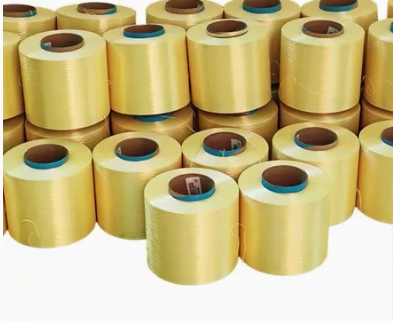
While natural para-aramid appears golden-yellow, colored variants serve applications requiring specific appearances. Solution-dyed fibers incorporate colorants during spinning for permanent coloration. Other specialty grades may include UV stabilizers for outdoor applications or anti-static treatments for electronics environments. These variants maintain the base mechanical properties while adding specific functionality.
Selection and Handling Guidelines
Proper selection and handling of para-aramid fibers ensures optimal performance in finished products. These materials require specific considerations throughout the supply chain.
- Grade Selection Criteria
Select fiber grade based on application requirements for strength, modulus, and environmental resistance. Consider processing methods and compatibility with other materials. Evaluate cost-performance trade-offs between standard and premium grades. Test candidate materials under conditions simulating actual use. Document specifications clearly for supply chain consistency.
- Moisture Management
Para-aramid fibers absorb moisture from the atmosphere, typically 3-7% by weight depending on humidity. This moisture affects processing and final properties. Control humidity during storage and processing to maintain consistency. Dry fibers before high-temperature processing to prevent moisture-related defects. Recognize that mechanical properties may vary with moisture content.
- UV Protection
Ultraviolet radiation degrades para-aramid fibers over time, causing strength loss. Protect fibers from direct sunlight during storage and handling. Specify UV-stabilized grades for outdoor applications. Consider protective coatings or coverings for products exposed to sunlight. Monitor UV exposure in critical applications to ensure long-term performance.
- Cutting and Fabrication
Specialized tools and techniques optimize para-aramid cutting and fabrication. Standard scissors dull quickly; use carbide or diamond-coated blades instead. Laser cutting works well for many applications when properly controlled. Sewing requires heavy-duty needles and careful tension management. Follow manufacturer recommendations for specific fabrication processes.
FAQs
1. What is the difference between para-aramid and meta-aramid fibers?
The key difference lies in molecular structure. Para-aramid fibers have polymer chains aligned in parallel, creating highly crystalline regions that deliver exceptional tensile strength and modulus. Meta-aramid fibers have a different chain configuration that reduces crystallinity, resulting in lower strength but better flexibility and elongation. Para-aramid serves structural reinforcement and ballistic protection, while meta-aramid excels in heat-resistant clothing and electrical insulation where flexibility matters more than maximum strength.
2. Why is para-aramid fiber used in fiber optic cables?
Para-aramid fiber provides ideal tensile reinforcement for optical cables. Its high modulus prevents cable stretching during installation that could increase optical loss in glass fibers. The material’s light weight adds minimal cable mass. Its dielectric nature eliminates grounding concerns in all-dielectric cables. Heat resistance protects fibers when cables encounter elevated temperatures. Additionally, aramid’s flexibility allows cables to bend without damage while maintaining tensile strength.
3. How does temperature affect para-aramid fiber performance?
Para-aramid fibers maintain excellent properties across a wide temperature range. Continuous use temperatures reach 160-180°C with minimal property loss. Short-term exposure up to 400°C is possible before significant degradation begins. The fibers do not melt but carbonize at extreme temperatures. However, prolonged exposure near upper limits can cause gradual strength reduction. At cryogenic temperatures, the fibers actually become stronger while maintaining flexibility, making them suitable for space applications.
4. Can para-aramid fibers be recycled?
Recycling para-aramid fibers presents challenges but is possible through several methods. Mechanical recycling grinds fibers for use as filler in other products. Chemical recycling depolymerizes the material to recover monomers for new fiber production, though this process remains energy-intensive. Some manufacturers accept production waste for reprocessing into lower-grade materials. The most sustainable approach maximizes product life through durable design, as para-aramid’s exceptional longevity means products often outlast their application requirements.
Company Introduction: With over 20 years of deep industry expertise, we specialize in customizing and supplying solutions for optical fibers, cables, raw materials, and manufacturing equipment. We deliver reliable technical support and product services.
About the Author: With 20 years of hands-on experience in optical transmission media, cable assemblies, and core substrate materials, we offer practical, expert insights grounded in full-industry-chain expertise.