Shanghai Gengyun Industrial Co., Ltd
What Is an Optical Fiber Screening and Rewinding Machine?
Integrated Quality Assurance and Material Handling
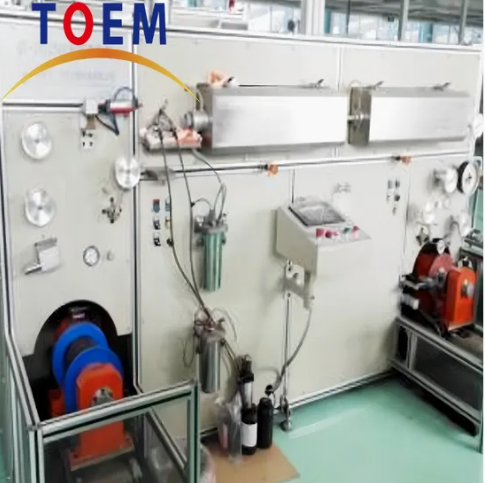
Optical fiber screening and rewinding machines combine mechanical strength testing with precision spooling in a single integrated system. This equipment performs proof testing to verify fiber strength while simultaneously transferring fiber from input spools to output spools with proper tension and layer winding.
The integration of screening and rewinding functions offers significant advantages over separate operations. Fiber passes through proof testing only once, eliminating additional handling that could cause damage. The combined process reduces labor requirements and floor space while improving overall efficiency through automated controls and coordinated tension systems.
- Combined Function Benefits
The screening function applies proof tension to identify weak points, with surviving fibers meeting strength requirements. The rewinding function transfers tested fiber onto shipping spools with consistent tension and proper layer winding. Combining these functions eliminates separate handling steps, reducing labor costs and minimizing potential damage from multiple handlings.
- Technological Evolution
Screening and rewinding technology has advanced alongside fiber manufacturing. Early systems performed functions separately with manual transfer between machines, increasing break risk. Modern integrated machines feature automated controls, coordinated tension systems, and comprehensive data logging with spool association for complete quality traceability.
System Components and Functionality
Screening and rewinding machines integrate multiple subsystems working in precise coordination. Each component performs specific functions critical to quality assurance and material handling.
- Pay-off Section
Input spool handling accommodates various sizes with motorized drives maintaining controlled back tension. Fiber condition monitoring detects pre-existing damage through diameter measurement and surface inspection. Accumulator systems provide buffer storage for continuous operation during spool changes, enabling uninterrupted production.
- Proof Test Section
Capstan drive systems apply controlled tension with multiple wraps for traction. Precision servo motors maintain target tension through closed-loop feedback. Tension sensing uses load cells for continuous measurement. Break detection identifies failures immediately through optical sensors, recording location and stopping drives to minimize material loss.
- Rewinding Section
Take-up tension control manages winding onto output spools with drive torque adjusting as diameter increases. Traverse mechanism ensures even layer winding through precision linear drives synchronized with spool rotation. Length measurement tracks output quantities with better than 0.1% accuracy using precision measuring wheels and encoders.
- Control and Data Systems
Unified operator interface provides complete machine control through touchscreen displays showing both screening and rewinding parameters. Data logging records test results with spool association for quality traceability. Recipe management stores parameters for different fiber types, ensuring consistent conditions across production runs.
Performance Capabilities and Specifications
Contemporary screening and rewinding machines achieve impressive performance metrics supporting efficient quality assurance.
- Operating Speed and Efficiency
Typical operating speeds range from 10-25 meters per second depending on fiber type. Proof tension range spans 0.5N to 20N with ±1% accuracy. Break detection responds within milliseconds, limiting material loss to a few meters per break.
- Quality and Accuracy
Tension control accuracy maintains proof test validity within ±1% of setpoint. Winding quality meets shipping requirements through consistent tension and proper traversing. Length accuracy better than 0.1% ensures correct quantities for customer orders.
- Technical Specifications
Typical machines handle fiber diameters from 125μm to 900μm with quick-change components. Input and output spool capacities range from 25km to 100km+ reels. Control systems feature Ethernet connectivity for factory integration.
Industry Trends and Future Development
Screening and rewinding technology continues evolving with quality requirements and automation advances.
- Increased Automation
Robotic spool handling eliminates manual loading and unloading. Automated guided vehicles transport materials between operations, enabling lights-out operation and reduced labor costs.
- Enhanced Data Integration
Cloud-based data systems aggregate results across multiple machines. Analytics identify trends and optimization opportunities through real-time dashboards.
- Higher Speed Capabilities
Continuing demand for productivity drives speed increases through advanced tension control algorithms and improved capstan designs.
FAQs
1. What are the advantages of combined screening and rewinding?
Combining functions eliminates separate handling steps, reducing labor requirements and potential damage. Fiber goes through proof testing only once while transferring to shipping spools with consistent tension control.
2. How does tension control differ between screening and rewinding?
Screening requires precise proof tension for strength verification using load cells and capstan drives. Rewinding requires lower, consistent tension for proper spooling using traverse mechanisms and take-up tension control.
3. What speed can these machines achieve?
Typical operating speeds range from 10-25 meters per second depending on fiber type. Standard telecommunications fiber runs at higher speeds using precision capstan drives.
4. How is break data associated with output spools?
Control systems track breaks continuously using optical sensors and record positions with length encoders. When winding onto output spools, the system knows which breaks occurred on which spool.
Company Introduction: With over 20 years of deep industry expertise, we specialize in customizing and supplying solutions for optical fibers, cables, raw materials, and manufacturing equipment. We deliver reliable technical support and product services.
About the Author: With 20 years of hands-on experience in optical transmission media, cable assemblies, and core substrate materials, we offer practical, expert insights grounded in full-industry-chain expertise.