Shanghai Gengyun Industrial Co., Ltd

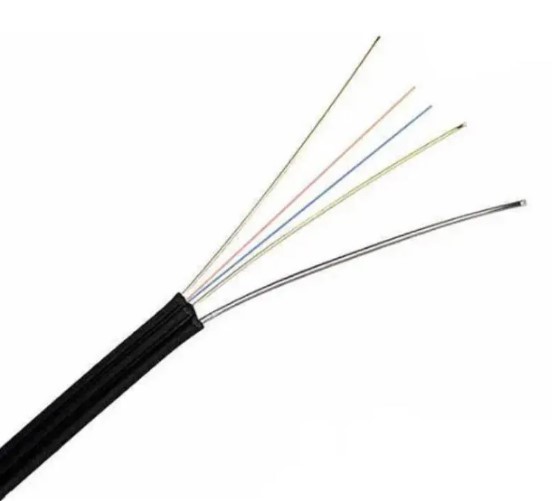
Low attenuation Super Om3 Multimode Fiber Optic For High Speed Network
Categories Multimode Fiber Optic, OM3, Optical Fiber, Products
T-OF090 TOEM’S OM2+ Bending Insensitive Multimode Fibre complies with or exceeds ISO/IEC 11801-1 OM2 specification, IEC 60793-2-10 A1-OM2 specification, and TIA-492AAAF A1-OM2 specification.
T-OF090 TOEM’S OM3/OM4 Bending Insensitive Multimode Fibres comply with or exceed ISO/IEC 11801-1 OM3/OM4 specifications, IEC 60793-2-10 A1-OM3/A1-OM4 specfications, and TIA-492AAAF A1-OM3/A1-OM4 specifications.
Features
- Optimized for 850nm VCSEL
- Compatibility with current OM2+/OM3/OM4 multimode fibre
- Superior geometry uniformity
- Low attenuation
- High bandwidth
- Low differential mode delay (DMD)
- Very low macro-bending sensitivity
- Coated with TOEM’s proprietary dual layer UV curable acrylate
Benefits and Applications
- Data centers
- Data storage networks
- High-performance computing centers a
- Office centers
- Local area networks (LAN)
- 1 & 10 & 40 & 100 & 400 Gb/s Ethernet
- supports the use and installation of optical cables with a small bending radius
- High resistance to micro-bending
- Optimized performance in tight-buffer cable applications
- Stable performance over a wide range of environmental conditions
System Link Length
| Characteristics | Conditions | Specified values | Units |
| Geometry Characteristics | |||
| Core Diameter | — | 50±2.5 | [μm] |
| Core Non-Circularity | — | ≤5.0 | [%] |
| Cladding Diameter | — | 125.0±1.0 | [μm] |
| Cladding Non-Circularity | — | ≤0.6 | [%] |
| Coating Diameter | — | 245±7 | [μm] |
| Coating/Cladding Concentricity Error | — | ≤10.0 | [μm] |
| Coating Non-Circularity | — | ≤6.0 | [%] |
| Core/Cladding Concentricity Error | — | ≤1.0 | [μm] |
| Delivery Length | — | up to 8.8 | [km/reel] |
| Optical Characteristics | |||
| Attenuation | 850nm | ≤2.4 | [dB/km] |
| 1300nm | ≤0.6 | [dB/km] | |
| — | — | MaxBand® OM2+/OM3/OM4 Bend Insensitive | |
| Overfilled Modal Bandwidth | 850nm | ≥700/≥1500/≥3500 | [MHz·km] |
| 1300nm | ≥500/≥500/≥500 | [MHz·km] | |
| Effective Modal Bandwidth | 850nm | ≥950/≥2000/≥4700 | [MHz·km] |
| Application support distance on | — | — | — |
| 40GBASE-SR4 / 100GBASE-SR101 | 850nm | -/140/170 | [m] |
| 10GBASE-SR | 850nm | 150/300/550 | [m] |
| 1000BASE-SR | 850nm | 750/1000/1100 | [m] |
| DMD Specfication | Compliant with and more stringent than the requirements of IEC60793-2-10 | — | |
| Numerical Aperture | — | 0.200±0.015 | — |
| Group Refractive Index | 850nm | 1.482 | — |
| 1300nm | 1.477 | — | |
| Zero Dispersion Wavelength(λ0) | — | 1295-1340 | [nm] |
| Zero Dispersion Slope(S0) | 1295nm≤λ0≤1310nm | ≤0.105 | [ps/(nm2·km)] |
| 1310nm≤λ0≤1340nm | ≤0.000375(1590-λ0) | [ps/(nm2·km)] | |
| Macrobending Loss2 | — | — | — |
| 2 Turns @ 15 mm Radius | 850nm | ≤0.1 | [dB] |
| 1300nm | ≤0.3 | [dB] | |
| 2 Turns @ 7.5 mm Radius | 850nm | ≤0.2 | [dB] |
| 1300nm | ≤0.5 | [dB] | |
| Backscatter Characteristics | 1300nm | ||
| Step(Mean of Bidirectional Measurement) | — | ≤0.10 | [dB] |
| Irregularities Over Fibre Length and Point Discontinuity | — | ≤0.10 | [dB] |
| Attenuation Uniformity | — | ≤0.08 | [dB/km] |
| Environmental Characteristics | 850nm & 1300nm | ||
| Temperature Cycling | -60℃ to 85℃ | ≤0.10 | [dB/km] |
| Temperature-Humidity Cycling | -10℃ to 85℃,4% to 98% RH | ≤0.10 | [dB/km] |
| Water Immersion | 23℃, 30 days | ≤0.10 | [dB/km] |
| Dry Heat | 85℃,30 days | ≤0.10 | [dB/km] |
| Damp Heat | 85℃, 85% RH,30 days | ≤0.10 | [dB/km] |
| Mechanical Specification | |||
| Proof Test | — | ≥9.0 | [N] |
| — | ≥1.0 | [%] | |
| — | ≥100 | [kpsi] | |
| Coating Strip Force | typical average force | 1.5 | [N] |
| peak force | ≥1.3, ≤8.9 | [N] | |
| Dynamic Stress Corrosion Susceptibility Parameter(nd, typical) | — | 20 | — |
Remarks: 1. Support distances considering maximum cable attenuation of 3.0 dB/km at 850 nm,
maximum total splice/connector loss of 1.0 dB and VCSELs maximum RMS spectral width ≤ 0.45 nm.
2. The launch condition for the macrobending loss measurement fulfils that described in IEC 61280-4-1.