
Shanghai Gengyun Industrial Co., Ltd
Fiber Optic Patch Cord Comparison: FC/UPC Single-Fiber, FC/UPC-SC/UPC Hybrid, FC/UPC Duplex, and FC-FC Single-Mode
Fiber optic patch cords form the backbone of every modern network. They create the essential links between devices. This guide compares four specific configurations: the FC/UPC single-fiber, the FC/UPC-SC/UPC hybrid, the FC/UPC duplex, and the FC-FC single-mode cord. Each type addresses unique connectivity challenges. Understanding their differences ensures you make the right choice for your installation, equipment, and testing needs.
Introduction to Patch Cord Families
Fiber optic patch cords are more than just simple cables. They are precision assemblies that must match your network’s physical and optical requirements.
- Key Design Components
All four patch cord types share a common foundation. They use high-quality single-mode fiber, typically with a 9/125μm core/cladding size. Each cord features FC connectors on at least one end, known for their threaded coupling mechanism. This threading provides a secure, vibration-resistant connection. The UPC (Ultra Physical Contact) polish is standard, indicated by blue or black strain relief boots. This polish delivers a return loss above 50dB, which is ideal for digital applications.
- Decoding Connector Types
Connector terminology can be confusing. FC connectors use a 2.5mm ceramic ferrule inside a metal barrel with a threaded nut. SC connectors also use a 2.5mm ceramic ferrule but have a square plastic body with a simple push-pull latch. UPC refers to the connector’s end-face polish, which is slightly curved to minimize back reflection. Grasping these terms helps you decode any patch cord specification.
- Configuration and Application Overview
The primary difference between these four cords lies in their connector arrangement. A single-fiber cord has one fiber with identical connectors on both ends. A hybrid cord has a different connector on each end, like FC on one side and SC on the other. A duplex cord combines two fibers into a single assembly, often clipped together for paired connections. Your choice depends entirely on the equipment you are connecting and the physical layout of your network.
The FC/UPC Single-Fiber Patch Cord: Your Basic Building Block
This cord is the most fundamental type. It acts as the workhorse for many direct connections.
- Design and Simplicity
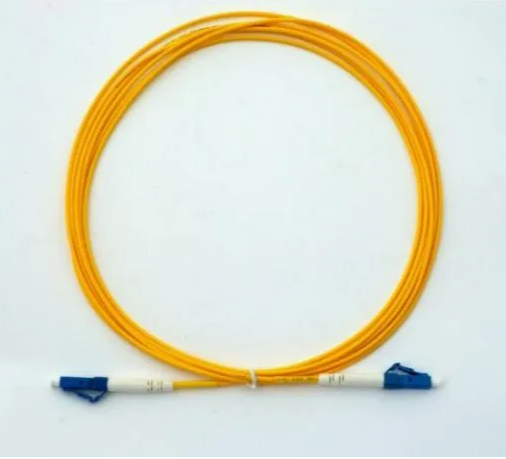
This assembly features an FC/UPC connector on both ends, connected by a single strand of fiber. It provides a straightforward, point-to-point link. The single fiber typically carries one signal direction, making it perfect for simplex applications. The yellow jacket clearly identifies it as single-mode fiber. Standard lengths range from 1 to 10 meters, but custom options are readily available.
- Ideal Use Cases
You will find these cords most useful in equipment-to-equipment setups where both devices have FC ports. Test laboratories rely on them heavily to connect instruments like optical spectrum analyzers and light sources. In telecommunications central offices, they serve as direct links for equipment. They are also the perfect choice for creating custom-length assemblies or as replacement cords for existing infrastructure.
The FC/UPC-SC/UPC Hybrid Cord: Bridging the Gap
This cord solves a common problem: connecting equipment from different generations or vendors.
- Connecting Mismatched Interfaces
One end of this hybrid cord terminates with an FC/UPC connector, while the other end uses an SC/UPC connector. The FC side provides a secure threaded connection, while the SC side offers a quick push-pull latching mechanism. Both ends use the same UPC polish, ensuring consistent optical performance across the link.
- Strategic Applications
Hybrid cords are invaluable during network transitions. For example, they allow you to connect new SC-based switches to older FC-based transport gear. Field technicians always carry a selection of these to handle diverse situations during service calls. System integrators use them to connect multi-vendor equipment, saving time and avoiding the need for multiple adapter barrels.
The FC/UPC Duplex Cord: Mastering Paired Fiber Management
When your application requires two fibers—one to transmit and one to receive—this cord is the standard solution.
- Polarity and Pairing
This cord combines two fibers into one assembly. Both ends feature two FC/UPC connectors, typically held together by a duplex clip. This clip is critical as it maintains the correct polarity. It ensures that the fiber in position A on one end connects to position A on the other end. The two fibers are often in a zip-cord construction for easy separation.
- High-Density Environments
Duplex cords are essential for optical transceiver connections. Devices like SFPs and SFP+ modules use separate ports for transmit and receive. In data centers, these cords are the go-to choice for server and storage connections because they dramatically simplify cable management. One duplex cord replaces two single-fiber cords, significantly reducing clutter in high-density racks.
The FC-FC Single-Mode Cord: A Focus on Directness
This cord is a subset of the FC/UPC single-fiber category. Its naming emphasizes its straightforward, all-FC, single-mode nature.
- The Most Direct Connection
The FC-FC single-mode cord represents the most direct link possible between two FC-terminated single-mode ports. It has identical connectors with UPC polish on both ends, connected by a single-mode fiber with a 9/125μm core. The yellow jacket and blue/black boots are standard. There are no adapters, no mixed connector types, and no polarity concerns—just a direct path.
- Legacy and Test Environments
This cord is the primary choice for any situation where both ends use FC connectors. It dominates in laboratory environments for test equipment connections. It also serves as the ideal replacement cord for legacy FC infrastructure. For permanent connections that do not require frequent changes, the FC’s threaded coupling provides a level of stability that is hard to beat.
Making the Right Choice: A Comparative Guide
Selecting the correct cord involves matching the connector type to your equipment and considering your installation environment.
- Connector Compatibility First
Your first step is always to check the equipment ports.
- The FC/UPC single-fiber and FC-FC cords require FC connectors on both ends.
- The FC/UPC duplex also requires FC on both ends but is designed for paired transceiver ports.
- The hybrid FC-SC cord is the only one that can connect FC equipment to SC equipment.
Using the wrong connector can damage your equipment or fail to create a proper optical connection.
- Considering Density and Management
How you manage your cables is just as important as the connection itself.
- For paired fibers, duplex cords offer the best cable management efficiency. They reduce clutter and prevent crossed connections.
- Single-fiber cords provide maximum routing flexibility. They are ideal for test setups where connections change frequently, even if they create more cable bulk.
- Hybrid cords solve a specific problem but add complexity to your inventory. Use them strategically during transitions
Key Industry Trends and Future-Proofing
The industry is constantly evolving. Your choice of patch cord should align with both current needs and future plans.
- The Shift to Higher Density
Modern data centers are moving toward higher-density solutions. While FC connectors are known for their durability, their size is a limitation. Newer facilities are increasingly adopting LC (Lucent Connector) or MPO (Multi-Fiber Push-On) connectors to pack more ports into less space. However, FC remains prevalent in telecom central offices and test labs where durability and security are paramount.
- A Strategy for Network Transitions
If you are migrating from FC to a smaller form factor like SC or LC, hybrid cords are essential tools. They allow you to phase in new equipment without forklift upgrades. However, they should be used as a transitional tool, not a permanent crutch. For new installations without legacy constraints, consider if FC is the right long-term choice or if a smaller, high-density connector would serve you better.
Maintaining Performance and Polarity
Regardless of the type you choose, proper manufacturing and handling are key to maintaining network integrity.
- Understanding Polarity
Polarity is the path of a light signal from one end to the other.
- With single-fiber cords, polarity is irrelevant because there is only one path.
- Duplex cords require careful polarity management. The duplex clip is designed to maintain correct pairing, ensuring the transmit port on one device connects to the receive port on the other.
- Hybrid cords also maintain polarity, ensuring the signal path is consistent across the two different connector types.
- Consistent Optical Performance
The configuration—whether it’s single, duplex, or hybrid—does not inherently change optical performance. All four types achieve similar insertion loss (typically below 0.3dB per connector pair) and return loss (above 50dB for UPC). Performance is determined by the quality of the connector termination and the care taken during handling. All reliable manufacturers meet rigorous industry standards for durability.
FAQs
1. Can I use an FC/APC patch cord instead of an FC/UPC one?
No, you should not mix APC (Angled Physical Contact) and UPC connectors. APC connectors, often with green boots, have an angled end-face for higher return loss. Connecting APC to UPC can damage the ceramic ferrules and significantly increase insertion loss. Always match the polish type.
2. I have a device with an FC port and another with an SC port. Which cord should I buy?
You need a hybrid FC/UPC-SC/UPC single-mode patch cord. This cord is specifically designed to bridge the gap between these two different connector types while maintaining optimal optical performance.
3. My switch uses SFP modules. Which of these cords is best for connecting to it?
For a standard SFP or SFP+ transceiver, you should use a duplex patch cord. These modules require two separate fibers for transmit and receive. A duplex cord with the appropriate connector for your SFP (e.g., if it’s an SC SFP, you would use an SC duplex cord) provides the correct polarity and efficient cable management.
4. What is the main advantage of the FC connector over other types?
The main advantage is its secure, threaded coupling mechanism. It is highly resistant to vibration and accidental disconnection, making it a preferred choice for test labs, critical central office equipment, and any environment where a stable, permanent connection is required.
Company Introduction: With over 20 years of deep industry expertise, we specialize in customizing and supplying solutions for optical fibers, cables, raw materials, and manufacturing equipment. We deliver reliable technical support and product services.
About the Author: With 20 years of hands-on experience in optical transmission media, cable assemblies, and core substrate materials, we offer practical, expert insights grounded in full-industry-chain expertise.