
Shanghai Gengyun Industrial Co., Ltd
How to Select and Process Continuous Filament Para-Aramid Yarn
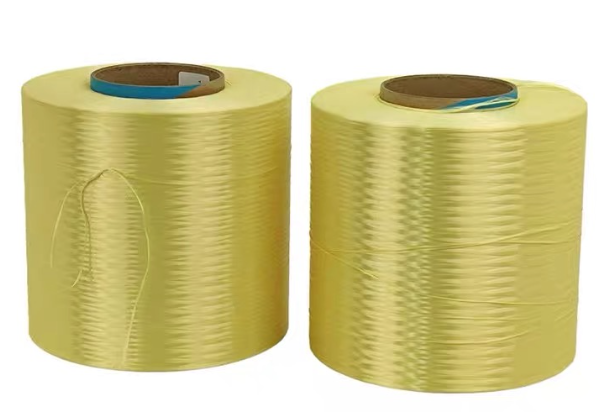
Continuous filament para-aramid yarn serves as a foundational material for high-performance industrial products. Unlike short fibers cut into lengths, this continuous strand runs uninterrupted from start to finish. This structure allows the material to deliver nearly its full theoretical strength. Manufacturers rely on it for applications where failure is simply not an option
Understanding Para-Aramid Filament
The journey begins with a liquid polymer. Manufacturers extrude this solution through a spinneret, creating individual filaments. They then gather these tiny fibers to form a multifilament yarn. This process eliminates weak points that typically occur at fiber ends.
- Continuous Filament vs. Staple Fiber
Continuous filament offers distinct advantages over staple fiber, which consists of short, cut lengths. The uninterrupted design allows the yarn to achieve maximum strength translation, as no fiber ends exist to initiate failure. Filament yarns also provide smoother surfaces and more consistent diameters. They generate far less lint, making them ideal for cleanroom applications. However, staple fibers sometimes perform better in textile processes that require bulk or specific surface textures.
- Yarn Size and Filament Count
Manufacturers produce these yarns across a wide size range. They measure size in denier, which represents the weight in grams of 9,000 meters of yarn. Common offerings span from 200 denier for lightweight applications to 3,000 denier for heavy-duty reinforcement. The filament count indicates how many individual fibers comprise a single yarn, typically ranging from 100 to over 1,000. The combination of denier and filament count determines both mechanical properties and processing behavior.
- Twist Level and Its Impact
Twist level significantly influences how the yarn performs. Low-twist or zero-twist yarns keep filaments parallel, maximizing strength for composite applications. Twisted yarns offer better abrasion resistance and handling characteristics for weaving or braiding. Balanced twist constructions prevent kinking and snagging during processing. Manufacturers carefully select the twist level to balance processability against final product requirements.
Key Applications Across Industries
Continuous filament yarns serve critical functions where maximum strength utilization matters. Their adoption continues growing as industries demand lighter, stronger materials.
- Optical Cable Strength Members
The telecommunications industry consumes vast quantities of this yarn. Here, it serves as a strength member inside optical fiber cables. The high modulus prevents cable stretch during installation, protecting the delicate glass fibers within. Multiple yarns combine to achieve required cable ratings. The material’s dielectric properties eliminate grounding concerns in all-dielectric cable constructions, a key advantage for utility and telecom applications.
- Advanced Composite Reinforcement
Composite manufacturers prize continuous filament for structural applications. Unidirectional composites align filaments parallel to applied loads, achieving exceptional strength-to-weight ratios. Woven fabrics from filament yarns provide multidirectional reinforcement for complex shapes like aerospace components and marine hulls. Filament continuity ensures efficient load transfer without weak points at fiber ends, a critical factor for safety-critical structures.
- Ballistic Protection Fabrics
Body armor and vehicle armor rely on woven filament yarns. The continuous structure maximizes energy absorption during projectile impact, as loads transfer along entire fiber lengths. Tight, precise weaves made possible by filament yarns provide consistent ballistic resistance across armor panels. Modern law enforcement and military applications depend on this reliability.
- High-Performance Ropes and Cables
Marine, offshore, and industrial rigging benefit from this yarn’s exceptional strength-to-weight ratio. Braided constructions combine multiple yarns into load-bearing ropes. Filament continuity eliminates weak points that could initiate failure under cyclic loading. These ropes perform where steel cables prove too heavy or where non-conductive properties are essential.
Performance Characteristics and Specifications
Understanding technical specifications enables proper material selection. Manufacturers provide detailed data to guide product development and quality control.
- Tensile Properties
Para-aramid filament exhibits distinctive tensile behavior. Typical tenacity ranges from 20-24 grams per denier, translating to tensile strength of 2.8-3.4 GPa. Initial modulus varies by grade from 400-900 grams per denier, indicating stiffness. Elongation at break typically measures 2.5-4.0%. These properties remain consistent along the entire filament length due to continuous manufacturing processes.
- Thermal Performance
The material performs reliably at elevated temperatures. It retains over 90% of room-temperature strength at 200°C. Thermal decomposition begins above 400°C, and the fiber does not melt. A slightly negative coefficient of thermal expansion means the filament contracts when heated, a valuable trait for dimensionally critical applications like precision instruments.
- Creep and Fatigue Resistance
Long-term performance sets this material apart. The highly crystalline structure resists molecular rearrangement, providing excellent creep resistance under sustained loads. Stress relaxation under constant strain also remains low. For dynamic applications like winch lines, proper lubrication and cable design minimize the effects of repeated flexing.
- Environmental Durability
The material withstands challenging conditions. It resists most chemicals and solvents. However, UV exposure can degrade surface properties over time. Proper coating or encapsulation protects against sunlight in outdoor applications. Moisture absorption remains low, though it can affect dimensional stability in precision applications.
Handling and Processing Guidelines
Working with this high-strength material requires specific techniques. Proper handling ensures the yarn’s properties translate successfully to finished products.
- Creel Setup and Tension Control
Processing often begins with a creel, a rack holding multiple yarn packages. You must maintain consistent tension across all ends to ensure uniform product quality. Over-tension can damage filaments or introduce unwanted stretch. Under-tension allows tangling and processing defects. Electronic tension control systems provide the precision needed for critical applications like aerospace composites.
- Splicing and Package Transfer
Continuous processes require joining yarn ends without stopping production. Splicing techniques use adhesives or mechanical methods to connect filament ends. A quality splice maintains strength while minimizing bulk. Automatic transfer systems switch between packages without interruption, essential for high-volume manufacturing.
- Static Control Measures
Para-aramid filaments generate static electricity during processing. This charge attracts contamination and causes handling difficulties. Antistatic finishes applied during manufacturing reduce charge generation. In dry environments, additional static elimination equipment like ionizing bars may prove necessary to neutralize charges before they cause problems.
- Storage and Environmental Control
Proper storage preserves filament integrity. Store yarn in controlled environments where humidity affects fiber moisture content and dimensions. Protect from direct UV exposure that could degrade surface properties. Use a first-in, first-out inventory system. Properly stored filaments maintain properties indefinitely, though finishes may have limited shelf life.
FAQs
1. What distinguishes para-aramid from meta-aramid?
This difference matters greatly for material selection. Para-aramid (such as Kevlar® or Twaron®) offers high strength and high modulus for ballistic and composite applications. Meta-aramid (such as Nomex®) provides exceptional thermal and flame resistance but lower tensile strength. Choose para-aramid for structural reinforcement and meta-aramid for thermal protection.
2. How do I select the right denier for my application?
Your choice depends on the final product’s requirements. Low denier (200-500) works well for lightweight fabrics and cable wrapping. Mid denier (1000-1500) suits ballistic vests and composite laminates. High denier (3000+) performs best for heavy-duty ropes, large cables, and structural reinforcement where maximum strength per end matters.
3. Can I process continuous filament yarn on standard textile equipment?
You can, but you must make adjustments. Filament yarns, especially zero-twist varieties, require precise tension control and static management. You may need tension sensors and antistatic devices to prevent filament breakage. Proper setup ensures high-quality output.
4. When should I choose staple fiber over continuous filament?
Choose staple fiber when you need bulkier texture, better paint adhesion, or a softer hand-feel. It also proves more economical for non-structural textile applications where the ultimate strength of filament is unnecessary. For maximum strength and stiffness, continuous filament remains the superior choice.
Company Introduction: With over 20 years of deep industry expertise, we specialize in customizing and supplying solutions for optical fibers, cables, raw materials, and manufacturing equipment. We deliver reliable technical support and product services.
About the Author: With 20 years of hands-on experience in optical transmission media, cable assemblies, and core substrate materials, we offer practical, expert insights grounded in full-industry-chain expertise.