
Shanghai Gengyun Industrial Co., Ltd
Hollow-Core Photonic Crystal Fiber
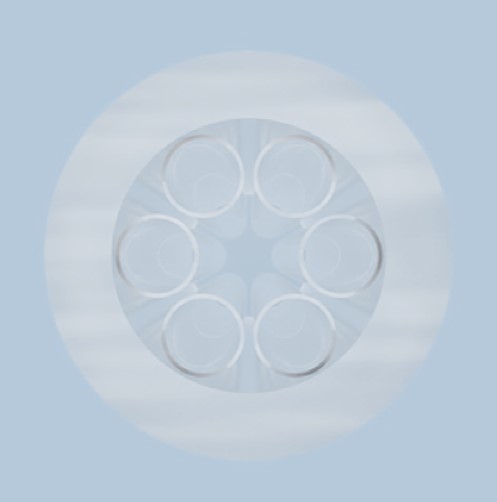
Introduction to Hollow-Core Fiber The hollow-core photonic crystal fiber guides light through air rather than glass. A periodic array of microscopic air holes surrounds the central hollow region. This structure confines light using photonic bandgap effects. The result is fiber where 99% of light travels in air. This design offers unique advantages over conventional solid-core fiber. Photonic […]
Introduction to Hollow-Core Fiber
The hollow-core photonic crystal fiber guides light through air rather than glass. A periodic array of microscopic air holes surrounds the central hollow region. This structure confines light using photonic bandgap effects. The result is fiber where 99% of light travels in air. This design offers unique advantages over conventional solid-core fiber.
- Guiding Mechanism Explained
Photonic bandgap effects prevent light from escaping the hollow core. The air hole pattern creates forbidden zones for certain light wavelengths. These zones force light to stay within the central hollow region. No total internal reflection occurs in this design. The guiding mechanism works even though air has lower refractive index than glass.
- Structural Design Parameters
The air hole pattern requires precise dimensions and spacing. Typical hole diameters range from 1 to 5 micrometers. The spacing between holes, called pitch, measures 3 to 10 micrometers. Small variations in these dimensions change the guided wavelength range. Manufacturing must achieve sub-micrometer precision across meter-scale lengths.
Key Applications and Use Cases
Hollow-core fiber enables applications where glass guidance proves limiting. These emerging uses leverage the unique properties of air guidance.
- High-Power Laser Delivery
Glass absorbs a small fraction of transmitted laser power. This absorption causes heating that limits power handling. Hollow-core fiber avoids glass absorption almost completely. The result is much higher power delivery capability. Industrial laser cutting and medical laser systems benefit significantly.
- Low-Latency Data Transmission
Light travels faster in air than in glass by about 30%. Hollow-core fiber reduces latency proportionally for long links. Financial trading networks value this reduced delay highly. High-frequency trading firms are early adopters of this technology. The latency advantage remains even over modest distances.
Performance Characteristics
Several unique performance parameters define hollow-core fiber capabilities. Users must understand these to apply the technology properly.
- Bandwidth and Loss Trade-offs
Current hollow-core fiber offers higher loss than solid-core types. Typical attenuation ranges from 1 to 10 dB/km. Research continues to reduce this loss toward solid-core levels. Bandwidth can exceed solid-core limits for certain applications. The technology improves rapidly with ongoing development.
- Nonlinearity Reduction
Glass has intrinsic nonlinear optical responses at high power. These nonlinearities distort signals and limit system performance. Air has negligible nonlinearity compared to glass. Hollow-core fiber eliminates these distortion effects. This enables higher power transmission without signal degradation.
Manufacturing Challenges
Producing hollow-core photonic crystal fiber requires specialized techniques. The complex air hole structure pushes manufacturing limits.
- Stack-and-Draw Method
Manufacturers assemble glass capillaries into the desired hole pattern. This stack is heated and drawn down to fiber size. The pattern must survive the drawing process without distortion. Careful control of temperature and tension is essential. Successful drawing produces kilometer-lengths of structured fiber.
- Quality Inspection Techniques
Microscopic examination verifies the hole pattern along the fiber. Optical testing measures guidance bandwidth and loss. Automated systems detect collapsed holes or pattern distortions. Only fiber meeting specifications reaches customers. Quality control remains challenging for this complex structure.
FAQs
1. How does hollow-core fiber achieve light guidance without total internal reflection?
The periodic air hole pattern creates photonic bandgaps. These bandgaps are wavelength ranges where light cannot exist in the glass regions. Light at these wavelengths gets confined to the hollow core instead. This mechanism works even though air has lower refractive index than glass.
2. What are the main limitations of current hollow-core fiber?
Attenuation remains higher than conventional fiber at 1-10 dB/km. Manufacturing is complex and yields are lower. Splicing to standard fiber requires special techniques. The technology is less mature than solid-core alternatives. However, research continues to address each limitation.
3. When will hollow-core fiber replace conventional fiber?
Widespread replacement is unlikely in the near future. Hollow-core fiber serves niche applications needing its unique properties. Most networks will continue using conventional solid-core fiber. The technologies will coexist, each serving appropriate applications.
Company Introduction: With over 20 years of deep industry expertise, we specialize in customizing and supplying solutions for optical fibers, cables, raw materials, and manufacturing equipment. We deliver reliable technical support and product services.
About the Author: With 20 years of hands-on experience in optical transmission media, cable assemblies, and core substrate materials, we offer practical, expert insights grounded in full-industry-chain expertise.