
Shanghai Gengyun Industrial Co., Ltd
All-Dielectric Self-Supporting (ADSS) Power Optical Cable
ADSS Cable Technology The all-dielectric self-supporting power optical cable hangs directly on high-voltage transmission towers. This cable contains no metallic components that could attract lightning or create ground paths. Its robust design supports its own weight across spans between towers. Power utilities use this cable to add communication capabilities to existing transmission lines. The fiber optic cores […]
ADSS Cable Technology
The all-dielectric self-supporting power optical cable hangs directly on high-voltage transmission towers. This cable contains no metallic components that could attract lightning or create ground paths. Its robust design supports its own weight across spans between towers. Power utilities use this cable to add communication capabilities to existing transmission lines. The fiber optic cores provide reliable data transmission in harsh electrical environments.
- Self-Supporting Design Principles
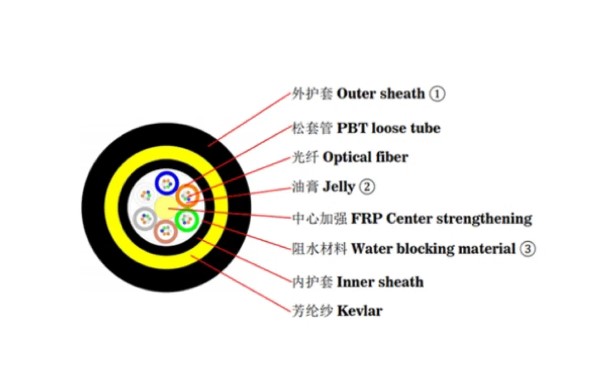
ADSS cable incorporates high-strength aramid or FRP strength members. These materials handle the tensile load of the cable’s own weight. The cable attaches to towers using specialized suspension hardware. No separate messenger wire or support strand is needed. This self-supporting feature simplifies installation significantly.
- All-Dielectric Construction Benefits
The absence of metal eliminates electrical conductivity concerns. Lightning strikes cause no damage to the dielectric cable structure. Electrical fields from transmission lines do not induce currents in the cable. Ground potential rise during faults poses no threat to the fiber. These safety advantages make ADSS ideal for power line deployment.
Key Applications and Use Cases
ADSS cable serves several critical functions for electric utilities. Each application leverages the cable’s unique electrical isolation properties.
- Utility Communication Networks
Power companies need reliable communication between substations and control centers. ADSS cable provides this link using existing transmission infrastructure. Protection relays and SCADA systems operate over these fiber circuits. Fault detection and isolation become faster and more coordinated. Grid reliability improves with high-speed communication.
- Rural Broadband Backhaul
Transmission lines often pass through remote rural areas. ADSS cable on these routes provides fiber backhaul for broadband service. Internet service providers lease fiber capacity from utilities. Rural communities gain high-speed internet without new tower construction. This shared infrastructure model reduces deployment costs significantly.
Performance Specifications
Several parameters determine ADSS cable suitability for specific installations. Engineers must understand these for proper system design.
- Span Length Capability
Maximum span length depends on cable weight and ice/wind loading. Typical ADSS spans range from 100 to 800 meters. Heavier cables with stronger strength members achieve longer spans. Environmental conditions like ice accumulation reduce safe span length. Manufacturers provide span tables for various loading conditions.
- Anti-Tracking Protection
Anti-tracking features prevent surface current damage on high-voltage lines. Dry band arcing can degrade standard cable sheaths over time. Special tracking-resistant sheaths use carbon-loaded or EVA materials. These materials conduct surface current safely without degradation. Proper sheath selection is critical for long cable life.
Installation and Handling Guidelines
Proper installation ensures ADSS cable performs safely over decades. Following manufacturer guidelines prevents common failures.
- Hardware and Fittings Selection
Suspension clamps hold the cable without causing excessive stress. Armor rods distribute clamping forces over longer cable lengths. Tension clamps terminate the cable at dead-end towers. Hardware must match cable diameter and construction type. Proper fitting selection prevents fiber crushing or excessive bending.
- Sag and Tension Calculations
Installation tension affects both cable lifespan and tower loading. Too much tension stresses the cable’s strength members unnecessarily. Too little tension allows excessive sag and wind-induced vibration. Calculate tension based on worst-case ice and temperature conditions. Stringing charts provided by manufacturers guide proper tension settings.
FAQs
1. What voltage levels can ADSS cable tolerate?
ADSS cable works safely on transmission lines from 6kV to over 500kV. The cable’s all-dielectric construction provides inherent voltage immunity. However, surface currents on the sheath increase with voltage. Tracking-resistant sheaths are recommended above 110kV. Proper hardware grounding practices also matter for high-voltage safety.
2. How long does ADSS cable last on a transmission line?
Properly specified ADSS cable lasts 20 to 30 years in service. UV exposure and temperature cycling gradually degrade polymer materials. Tracking-resistant sheaths extend service life on high-voltage lines. Periodic inspection identifies sheath degradation before failure occurs. Cable replacement is typically planned during line maintenance cycles.
3. Can ADSS cable be installed on existing energized lines?
Yes, ADSS installation often occurs on energized transmission lines. The dielectric cable poses no risk of electrical contact. However, proper safety procedures for working near live lines must be followed. Stringing equipment must maintain safe distances from conductors. Many utilities perform ADSS installations during scheduled outages for safety.
Company Introduction: With over 20 years of deep industry expertise, we specialize in customizing and supplying solutions for optical fibers, cables, raw materials, and manufacturing equipment. We deliver reliable technical support and product services.
About the Author: With 20 years of hands-on experience in optical transmission media, cable assemblies, and core substrate materials, we offer practical, expert insights grounded in full-industry-chain expertise.