
Shanghai Gengyun Industrial Co., Ltd
Waterproof & Environmentally Friendly Indoor Fiber Distribution Panel
Space Constraints in Indoor Installations
Waterproof environmentally friendly indoor fiber distribution panels often install in tight spaces. Telecom closets, equipment rooms, and utility areas have limited real estate. Each panel must maximize termination density within available space. Proper design balances density against maintainability. Understanding space optimization helps select appropriate panel configurations.
- Typical Space Limitations
Telecom closets may be as small as 1-2 square meters. Wall-mounted panels occupy zero floor space. Rack-mounted panels use vertical height efficiently. Corner locations limit panel depth and swing clearance. Space assessment determines maximum panel dimensions before selection.
- Density vs Accessibility Trade-offs
Higher density packs more terminations in less space. Very high density makes individual fiber access difficult. Maintenance operations require reaching specific connections. Labeling becomes more critical as density increases. Balance optimization selects appropriate density for expected access frequency.
Bend Radius Management in Tight Spaces
Maintaining minimum bend radius is challenging in dense panels. Several design features protect fiber bends.
- Integrated Radius Guides
Built-in radius guides route fibers through the panel safely. These guides prevent sharp bends at panel entry points. Curved surfaces maintain fiber bend radius consistently. Radius guide placement affects overall panel density. Guide design is critical for fiber protection in compact panels.
- Slack Storage Strategies
Excess fiber length must be stored without tight bends. Spools or mandrels provide organized slack storage. Folded storage works for shorter lengths in small panels. Storage design impacts how easily fibers can be accessed. Slack management affects both fiber safety and maintenance ease.
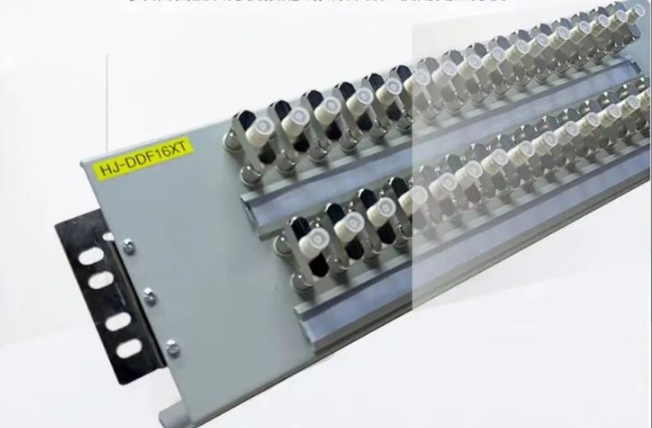
High Density Termination Techniques
Several approaches increase termination density within fixed panel size.
- Adapter Density Optimization
Quad (4-fiber) adapters pack more ports than duplex types. MPO cassettes offer the highest density per panel. Shuttered adapters protect connectors in dense configurations. Angled adapters improve access in crowded layouts. Adapter selection has the largest impact on port density.
- Connector Type Selection
LC connectors occupy less space than SC connectors. Uniboot LC connectors reduce cable bulk further. Bend-insensitive connectors maintain performance in tight bends. Push-pull boot designs ease connector handling. Connector choice affects achievable density and ease of use.
Thermal Management Considerations
High density panels can trap heat in enclosed spaces. Several factors affect thermal performance.
- Ventilation Requirements
Enclosed panels need ventilation for heat dissipation. Perforated covers or side vents allow air circulation. Solid waterproof panels retain more heat than ventilated types. Panel mounting orientation affects natural convection. Ventilation design balances waterproofing with thermal needs.
- Heat Source Management
Passive fiber panels generate negligible heat themselves. Adjacent active equipment may add heat to the enclosure. External heat sources affect panel internal temperature. Temperature-sensitive components may require derating. Thermal analysis ensures all components stay within specifications.
FAQs
1. What is the maximum number of fibers in a 1U panel?
Standard 1U panels terminate 24-48 LC duplex fibers. High-density 1U panels reach 72-96 fibers with LC. MPO-based panels achieve 144-288 fibers in 1U. Density beyond 96 LC ports makes maintenance difficult. Choose practical density based on access requirements.
2. How much slack fiber should be stored in a distribution panel?
Store 1-2 meters of slack per fiber for future re-termination. This allows 2-3 re-terminations before fiber replacement. Too little slack limits future maintenance options. Too much slack creates management challenges. Balance based on expected panel lifetime and change frequency.
3. Can I mix different connector types in the same panel?
Yes, many panels accept interchangeable adapter plates. Mixing types reduces density compared to uniform configuration. Labeling becomes more important with mixed connector types. Maintain separate adapter plates for each connector type. Document mixed configurations clearly for future technicians.
Company Introduction: With over 20 years of deep industry expertise, we specialize in customizing and supplying solutions for optical fibers, cables, raw materials, and manufacturing equipment. We deliver reliable technical support and product services.
About the Author: With 20 years of hands-on experience in optical transmission media, cable assemblies, and core substrate materials, we offer practical, expert insights grounded in full-industry-chain expertise.