
Shanghai Gengyun Industrial Co., Ltd
High Speed Auto-Alignment FTTH Fiber Fusion Splicer – Easy to Handle
Field Efficiency Factors
High speed auto-alignment FTTH fiber fusion splicers must balance speed with ease of use. Field installers complete multiple splices per day. Each splice cycle includes preparation, fusion, and protection. Reducing any cycle step improves daily productivity. Understanding efficiency factors helps select optimal equipment.
- Splice Cycle Components
Fiber preparation takes the most time in the splice cycle. Stripping, cleaning, and cleaving require manual steps. Auto-alignment fusion completes in 6-10 seconds. Heater shrinks protection sleeve in 15-25 seconds. Cycle analysis identifies opportunities for time savings.
- Parallel Operations
Some splicers perform heating while preparing next splice. This parallel processing reduces dead time between splices. Battery swapping during operation improves uptime. Multi-fiber holders speed ribbon splicing preparation. Operation overlap increases daily splice counts significantly.
Ergonomic Design Features
Physical comfort affects installer productivity over full workdays. Several design features reduce fatigue.
- Weight and Balance
Lightweight splicers under 1.5 kg reduce arm fatigue. Balanced design prevents tipping when placed on surfaces. Center of gravity affects how the splicer sits on poles. Carrying case design affects transport comfort. Weight optimization directly impacts installer fatigue levels.
- Display and Interface
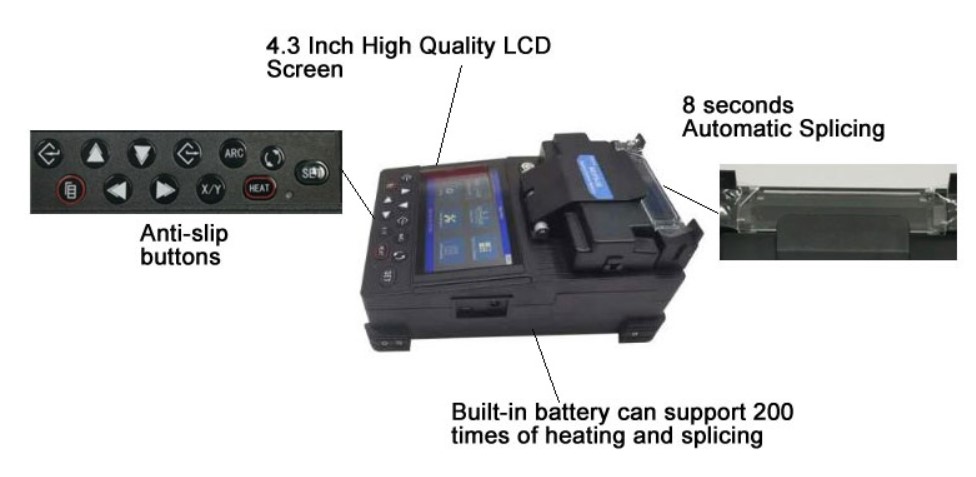
High-brightness screens remain visible in direct sunlight. Touchscreen operation with gloved hands is essential. Large buttons accommodate work-gloved fingers. Menu simplicity reduces training time and errors. Interface design affects speed and accuracy of operation.
Cold Weather Operation
Low temperatures create unique challenges for field splicing. Several adaptations improve cold weather performance.
- Battery Performance in Cold
Battery capacity decreases significantly below freezing. Keep spare batteries inside a warm vehicle. Battery heaters maintain operating temperature in some models. Lithium-ion batteries outperform older chemistries in cold. Battery management prevents work stoppages from cold-induced failure.
- Splicer Cold Weather Features
Heated V-grooves prevent ice formation on fiber alignment. Fast screen response in cold requires specialized LCDs. Plastic components become brittle in extreme cold. Protective boots shield the splicer from snow and ice. Cold-weather design extends usable temperature range for field work.
Maintenance for Field Reliability
Field splicers face dust, moisture, and temperature extremes. Preventive maintenance ensures reliable operation.
- Field Cleaning Procedures
Clean optics daily in dusty installation environments. Use canned air to remove dust from V-grooves. Alcohol wipes clean fiber holders and other surfaces. Inspect before each use for visible contamination. Daily cleaning prevents gradual performance degradation.
- Storage and Transport Protection
Store splicer in its protective case when not in use. Keep case closed during transport between jobs. Avoid leaving splicer in hot vehicles during summer. Use silica gel packs to control internal humidity. Protective practices extend splicer service life significantly.
FAQs
1. How many splices can an installer complete per day with an auto-alignment splicer?
Experienced installers complete 50-100 splices per day. Factors include distance between splices and working conditions. Preparation time dominates total cycle time. Auto-alignment saves 20-30 seconds per splice compared to manual alignment. Daily total depends heavily on site conditions.
2. Does cold weather require special splicer settings?
Most modern splicers automatically compensate for temperature. Arc calibration adjusts for cold air density changes. Follow manufacturer guidelines for extreme cold operation. Allow cold splicer to warm up before critical splices. Some models have cold-weather operational modes.
3. How often should field splicers be professionally serviced?
Annual factory calibration is recommended for production use. More frequent service may be needed for harsh environments. Self-cleaning and user maintenance between services is essential. Track splice loss trends to identify service needs. Preventive service avoids unexpected field failures.
Company Introduction: With over 20 years of deep industry expertise, we specialize in customizing and supplying solutions for optical fibers, cables, raw materials, and manufacturing equipment. We deliver reliable technical support and product services.
About the Author: With 20 years of hands-on experience in optical transmission media, cable assemblies, and core substrate materials, we offer practical, expert insights grounded in full-industry-chain expertise.