Shanghai Gengyun Industrial Co., Ltd
What is a Fusion Splicer and How Does it Build Modern Fiber Networks?
The Precision Tool for Fiber Optic Connections
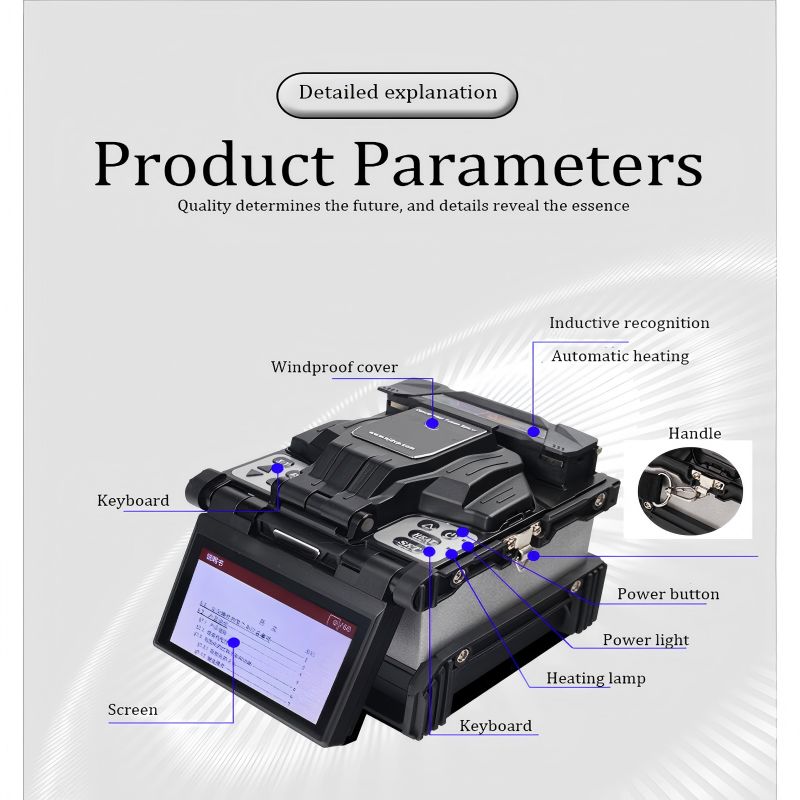
In the world of fiber optic communication, a perfect connection between glass strands is essential. The Fusion Splicer makes this possible. People also call it an Optical Fiber Splicer. This high-precision tool builds, maintains, and repairs all modern optical networks. It fuses two fiber ends together permanently. This creates a continuous, low-loss optical path. Today’s advanced models use automatic core alignment and fiber laser welding. They achieve very high-quality connections. This tool forms the physical backbone of our digital world.
- Why Fusion Splicing is Essential
Fusion splicing creates a continuous glass joint. Unlike mechanical connections, it has no air gap. This offers key advantages: extremely low optical signal loss, minimal back-reflection, high mechanical strength, and great long-term stability. Networks need these traits for good performance. This is true for long-haul telecom networks, data center links, and sensitive sensing systems. High-quality fusion splicing fully unlocks fiber’s bandwidth and low latency
- The Evolution: From Manual Arc to Automated Laser
Early splicers needed much operator skill. They used manual alignment and unstable electric arcs. Modern high-end fusion splicers represent a big leap. They use smart vision systems for automatic alignment. Many now use fiber lasers as a better heat source. This evolution cut splice loss and improved consistency. It also made operation easier. Now, technicians can join more fiber types reliably.
Core Technology and Key Performance Features
A modern splicer’s performance depends on its alignment, heating, and software.
- The Heart of Precision: Automatic Alignment Systems
Alignment is the most critical step. Splicers mainly use two methods:
- Cladding Alignment: The system aligns the fibers’ outer diameters. This is faster and works for many multimode fiber uses.
- Core Alignment: This is the best method for single-mode fiber. Cameras image the fiber ends from multiple angles. They find the actual light-carrying core positions. Then the machine aligns these cores with great accuracy. This ensures the lowest splice loss (often <0.05 dB).
- Advanced Heating: Fiber Laser Welding Technology
The fusion process needs intense, local heat. Fiber laser welding is a top advancement:
- Superior Stability & Control: The laser gives perfectly consistent, non-contact heat. It does not wear out like electrodes.
- Cleaner and Stronger Splices: It creates a smaller heat zone. This makes a stronger splice point with potentially lower loss.
- Specialty Fiber Capability: Its precise control is ideal for rare erbium-doped fibers, photonic crystal fibers, and other delicate types.
- Intelligent Operation and Key Specifications
Modern splicers are very automated and user-friendly:
- Automatic Functions: These include arc calibration, cleaning, Automatic Loss Estimation (LID), and sleeve heating.
- Performance Metrics: Key specs are average splice loss, splice time, battery life, and operating temperature range.
- Data Management: Built-in storage and Wi-Fi allow for splice data logging and quality reports.
Applications Across Industries and Network Layers
Fusion splicers are vital everywhere, from global networks to tiny lab setups.
- Primary Deployment Sectors
- Telecommunications: This is the largest market. They splice FTTH drop cables, build network hubs, and repair lines.
- Power Utility Networks: They splice OPGW and ADSS cables for smart grid communications.
- Broadcasting & CATV: They ensure low-loss connections for video networks.
- Enterprise & Data Centers: They splice high-count cables in data center interconnects (DCI).
- Research, Sensing, and Defense: They fabricate fiber lasers and sensors for medical and military uses.
- The Splicer’s Role in Network Quality
The fusion splicer decides the physical layer’s final quality. A network with great cables can still fail from poor splices. A high-performance splicer makes each connection point add minimal loss. This maximizes the system’s optical budget. It supports higher data rates over longer distances and cuts future failures. It is the key tool for turning raw fiber into a coherent network.
Future Trends and Conclusion
Bandwidth growth and new fiber uses keep driving fusion splicing innovation.
Future splicers will focus on higher speed. This is key for mass splicing fiber ribbon cables in data centers. Artificial intelligence (AI) will help optimize parameters and recognize fiber types. There is also a trend toward specialization. Splicers will have dedicated programs for polarization-maintaining (PM) fiber and hollow-core fiber. Portability and toughness for field use will also improve.
In conclusion, the modern Fusion Splicer is a sophisticated optical instrument. It is central to reliable fiber optic connectivity. It masters micron-scale alignment and glass fusion. This creates the low-loss joints that form our global communications base. As networks use more complex fibers, splicer advancement will remain a critical enabler for our connected future.
FAQs
1. What is the real difference between core alignment and cladding alignment splicers?
The difference is precision and use. Cladding alignment splicers align the fibers’ outer diameters. They are faster and cheaper, good for multimode fiber. Core alignment splicers image and align the actual light-carrying cores. This is essential for single-mode fiber in long-distance networks. It guarantees the lowest loss.
2. When would I need a fiber laser splicer instead of a standard arc fusion splicer?
Choose a fiber laser splicer for demanding jobs. Use it for specialty fibers like erbium-doped or photonic crystal fiber. Its clean heat prevents damage. It also gives the highest splice strength for critical uses. For standard telecom fiber, modern arc splicers work well and cost less.
3. How accurate is the “Estimated Loss” displayed by the splicer?
The Automatic Loss Estimation (LID) is a calculation from the splicer’s cameras. It is a very good quality indicator for process control. However, an OTDR trace gives the definitive loss measurement. The LID helps field technicians spot a bad splice immediately.
4. Can one fusion splicer handle all different types of optical fiber?
Most splicers have programs for common fibers like SMF and MMF. But uncommon specialty fibers often need a splicer with specific tools and settings. Always check the manufacturer’s specs for your fiber type.
Company Introduction: With over 20 years of deep industry expertise, we specialize in customizing and supplying solutions for optical fibers, cables, raw materials, and manufacturing equipment. We deliver reliable technical support and product services.
About the Author: With 20 years of hands-on experience in optical transmission media, cable assemblies, and core substrate materials, we offer practical, expert insights grounded in full-industry-chain expertise.